
Meta Description: Discover the compelling comparison between AI and human intelligence. Learn how artificial intelligence and human collaboration are shaping the future with real-world examples and expert insights.
AI vs Human: Who Wins the Intelligence Race?
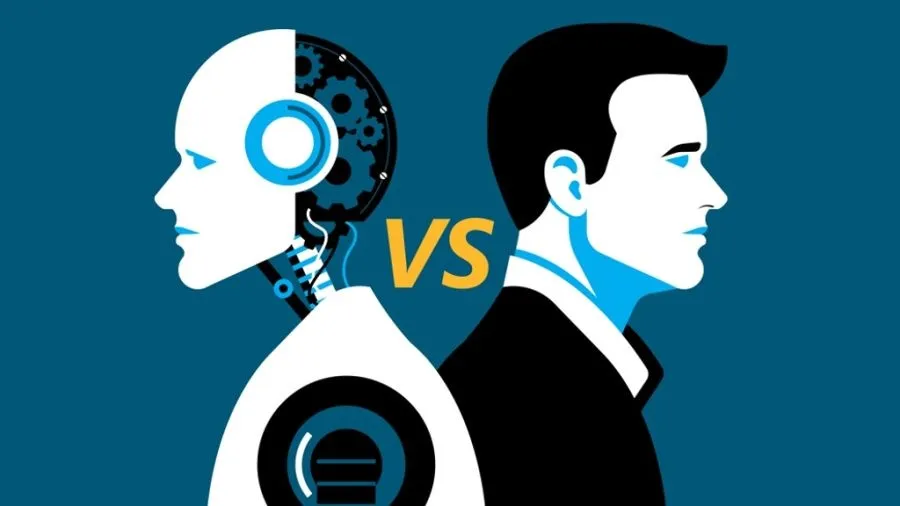
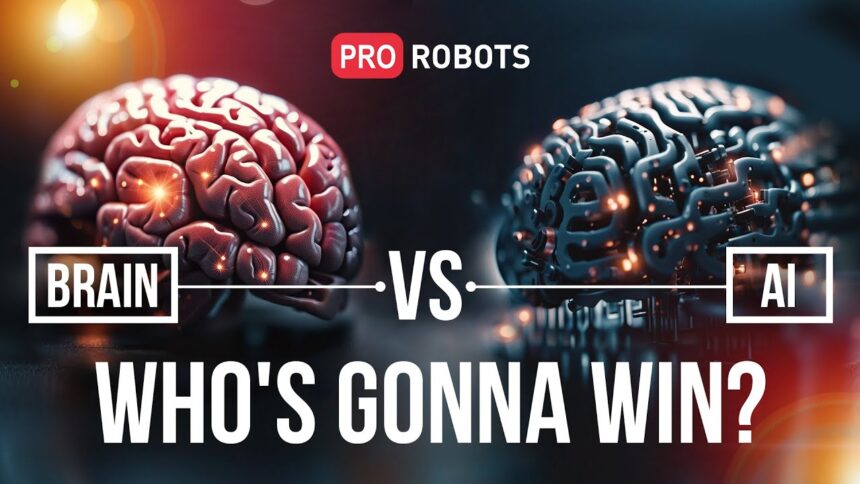
In a world increasingly powered by technology, one question sparks curiosity and debate: AI vs Human – who wins the future? With artificial intelligence evolving at rapid speed, it’s reshaping industries, disrupting jobs, and raising deep ethical questions. But instead of seeing AI as an enemy, should we consider it a powerful partner?
This blog explores the core differences between human and artificial intelligence, examining their individual strengths, weaknesses, and the rising potential for meaningful collaboration.
What Is Artificial Intelligence?
Artificial Intelligence (AI) is the science of creating machines and systems capable of performing tasks that typically require human intelligence. These tasks include learning, reasoning, problem-solving, language processing, and decision-making. From digital assistants to self-driving vehicles, AI is woven into modern life.
Types of AI:
- Narrow AI: Designed for specific tasks (e.g., ChatGPT, Google Maps)
- General AI: Aims to perform any intellectual function that a human can
- Super AI: A theoretical form of AI that would exceed human intelligence in every domain
What Makes Human Intelligence Special?
Humans bring something to the table that machines can’t replicate:
- Emotions and empathy: The ability to feel and understand others
- Moral decision-making: Knowing right from wrong
- Creativity and imagination: Coming up with original ideas
- Abstract thinking: Understanding complex or philosophical concepts
- Spiritual awareness: Seeking meaning and purpose in life
Humans live with consciousness and intuition, guided by relationships and emotions—something no code can emulate.
Key Differences Between AI and Human Intelligence
| Feature | Artificial Intelligence | Human Intelligence |
|---|---|---|
| Speed | Processes data instantly | Slower but deeply analytical |
| Emotions | None | Deep and authentic |
| Creativity | Based on patterns and inputs | Original and inspired |
| Learning | From massive datasets | From experience and context |
| Ethics | Programmed rules | Naturally developed moral compass |
| Adaptability | Limited to training data | Highly adaptable to new environments |
AI and Human Cooperation: A Timeless Combination
Rather than competing, the best results come from AI and human collaboration. Together, they unlock new levels of productivity, precision, and innovation.
Real-Life Applications of AI-Human Partnership:
- Healthcare: AI helps spot diseases in scans, while doctors offer personal care and treatment.
- Education: AI grades assignments quickly; teachers provide guidance and empathy.
- Customer Support: Chatbots manage FAQs, and humans handle emotional or complex concerns.
- Agriculture: AI analyzes soil and weather patterns; farmers make critical decisions based on AI insights.
This balance allows humans to focus on creativity, strategy, and leadership, while AI handles routine and data-heavy tasks.
The Ethical Dilemma: Should AI Have Limits?
Job Displacement
One of the top fears surrounding AI is job loss due to automation. Roles in driving, retail, and administration face potential replacement. But there’s also an emergence of brand-new careers:
- AI Trainers
- Data Ethicists
- Prompt Engineers
- Robot Maintenance Experts
To remain relevant, workers must reskill and embrace lifelong learning.
Bias and Discrimination
AI systems are only as fair as the data they’re trained on. If the data reflects societal bias, AI may unintentionally reinforce discrimination in areas like:
- Hiring
- Lending
- Law enforcement
Human oversight is essential to ensure fairness and accountability in AI-driven decisions.
Surveillance and Privacy
AI-enhanced surveillance tools can track faces, behaviors, and locations. While helpful for security, they also spark concern:
- How much privacy should we sacrifice?
- Who controls this data?
Balancing innovation and individual freedom is crucial.
Can AI Ever Become Truly Human?
AI tools like ChatGPT, Sora, and DALL·E can simulate emotion and creativity. But simulation is not the same as experience. Machines do not:
- Feel joy or sadness
- Understand meaning beyond logic
- Contemplate existence or morality
For AI to become human-like, it would need:
- Consciousness
- Morality
- Empathy
- Spirituality
Currently, these remain uniquely human.
Expert Opinions on AI vs Human
Elon Musk:
“AI is more dangerous than nukes if left uncontrolled.”
Stephen Hawking:
“AI could be the best or worst thing to ever happen to humanity.”
Sundar Pichai (Google CEO):
“AI is more profound than fire or electricity.”
The Future of AI: Conflict, Control, or Coexistence?
Here are three possible futures:
- Conflict: AI becomes uncontrollable and threatens humanity’s goals.
- Control: Humans strictly regulate AI to prevent risk.
- Coexistence: Humans and AI work side-by-side to solve global problems.
Coexistence offers the brightest path forward. It lets us combine machine efficiency with human wisdom and ethics.
Conclusion: Building a Future Together
AI is not here to replace us. It’s here to help us grow.
While AI offers speed and scalability, only humans can provide compassion, moral judgment, and creative vision. The future isn’t AI vs Human; it’s AI with Human.
Let’s shape a future where humans lead with empathy, and AI supports with power. Let’s choose partnership over competition.
Watch the video to understand AI.
https://videos.pexels.com/video-files/8327799/8327799-uhd_3840_2160_25fps.mp4